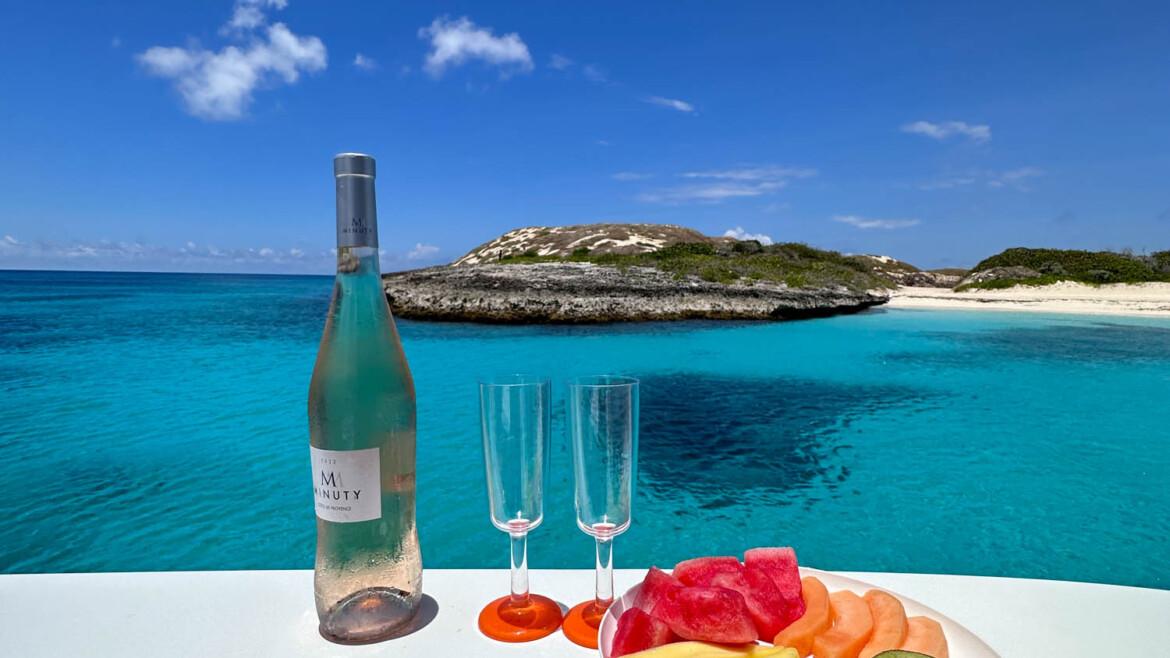
Halfway between St. Martin and St. Barth lies a place most travelers never set foot on. Île Fourchue is uninhabited, protected, and accessible only by boat. No ferry, no restaurant, no jetty — just a wild crescent of land rising out of the Caribbean, surrounded by some of the clearest water in the region.
We bring guests here when they ask for a stop that feels truly off-grid. It is one of the rare anchorages in the area where you can spend an hour in a quiet bay without seeing another boat at certain times of day.
A protected islet shaped by a collapsed volcano
Île Fourchue — sometimes spelled Île Fourche — is part of the Réserve Naturelle de Saint-Barthélemy and falls under the administration of the Collectivity of Saint Barthélemy. The island spans roughly 40 hectares and rises to about 104 meters at its highest point. Its jagged silhouette is what remains of a long-collapsed volcanic caldera, which explains the five hilltops that earned it the old nickname "Five Islands."
The island shelters one of the largest brown booby colonies in the Eastern Caribbean. You will also spot frigatebirds circling the cliffs and the occasional iguana on the rocky slopes. Conservation rules apply: no camping, no fires, no taking anything home, and dogs are not allowed ashore. More background is available on the Wikipedia entry for Île Fourchue.
What to expect on the water
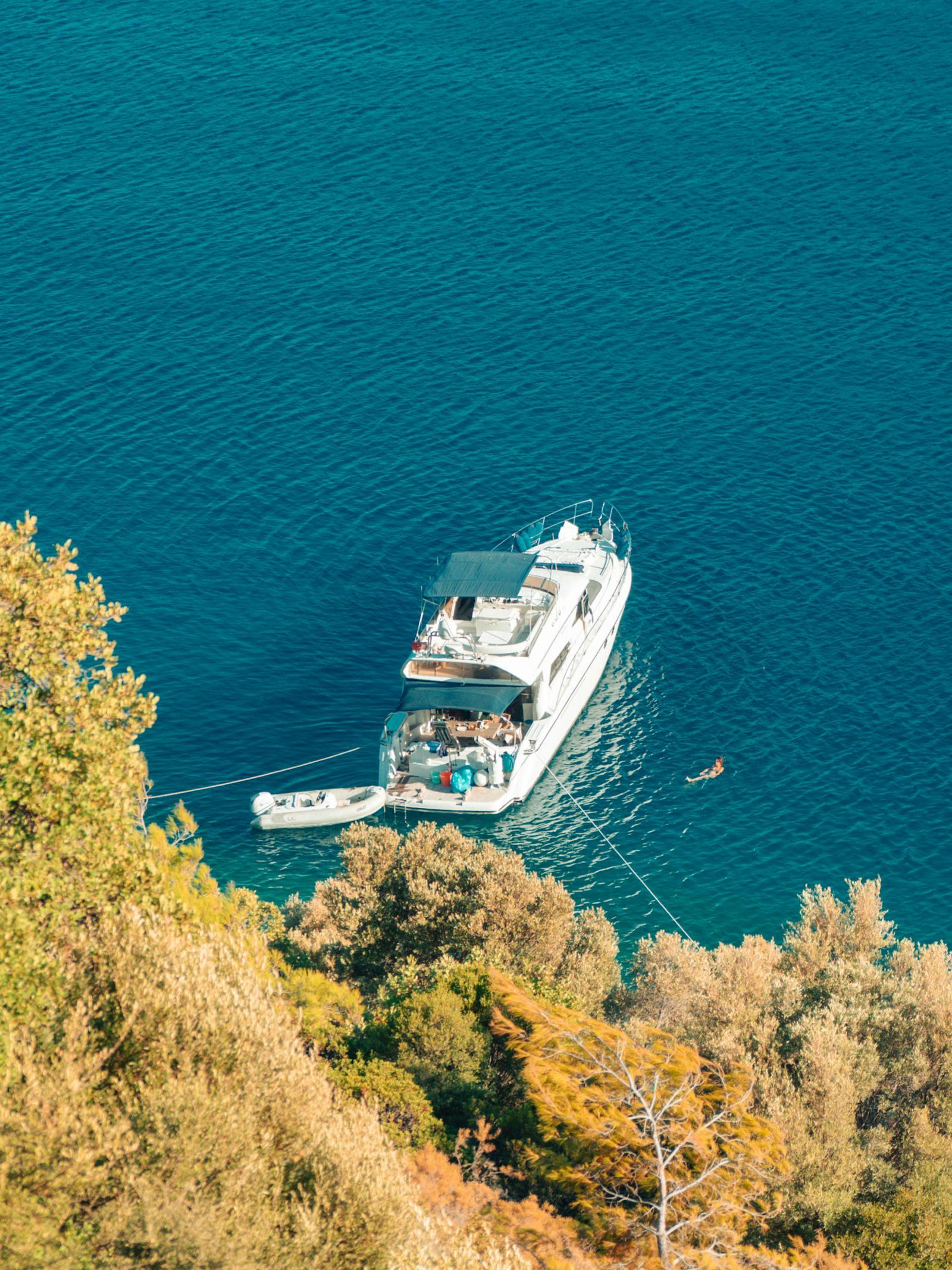
The main anchorage sits on the southwest side, inside a horseshoe-shaped bay protected from the prevailing trade winds. The seabed is sand and gravel, dotted with patches of seagrass. Holding is generally good, but the bay can get gusty when the wind shifts to the north.
The water is famously clear here — visibility often exceeds 20 meters. Snorkeling along the rocky edges turns up sergeant majors, blue tangs, parrotfish, and the occasional reef shark passing through. If you have already explored the top snorkeling spots in St. Barts, Fourchue offers a wilder, less crowded alternative just north of Gustavia.
For more adventurous swimmers, a short hike up the central ridge rewards you with a panoramic view stretching from Saint-Barth to Anguilla. Bring proper shoes — the trails are dry, steep, and exposed to the sun.
Combining Île Fourchue with the wider crossing
Fourchue makes the most sense as part of a longer day at sea. The crossing from Sint Maarten to Saint-Barth passes within a few miles of the islet, so it slots naturally into a day charter that ends with lunch in Gustavia or Colombier Beach. Allow 30 to 45 minutes underway from either Saint-Martin or Saint-Barth, depending on conditions.
Pair it with a lunch stop on the way back and you have a full day that mixes wilderness with proper hospitality. If you are still weighing format, our guide on half-day vs. full-day charters breaks down which option fits this kind of route.
When to go and what to bring
Conditions are best between December and June, when the sea is calmer and the trade winds steadier. June through October can be lively in the central channel — Fourchue is exposed once you leave the bay, and short, choppy swells can build up around midday.
Bring sun protection, water shoes, a refillable bottle, and a small dry bag for valuables. There is no shade ashore and no facilities of any kind. We carry everything you need on board, and our team can plan the route so the wind sits behind you on the way home. If Fourchue sounds like the kind of stop you would like in your day, tell us when you book — we will line it up with the rest of your itinerary.